
An unexpected flood of memories recently reminded me of one of the most formative experiences of my adolescence. I pulled a scrapbook and photos out of a storage closet after realizing it’s been 20 years since I attended Presidential Classroom in Washington, D.C.
Flipping through my workbook, hand-written notes, and photographs provided a rush of nostalgia.
As a senior in high school, I was selected as a scholar for the leadership development program’s week-long ‘Media and Democracy’ seminar. Just as I was discerning college and a career in broadcast journalism, my first-ever visit to Capitol Hill solidified the decisions that followed.
Founded in 1968, Presidential Classroom exposed high school juniors and seniors to the inner-workings of the Federal government through a unique academic experience. Until the organization disbanded in 2013, it was considered among the premiere civic education programs in the country. Where else could a teenager expect to interact with policy makers, influential leaders, and renowned journalists in one setting?
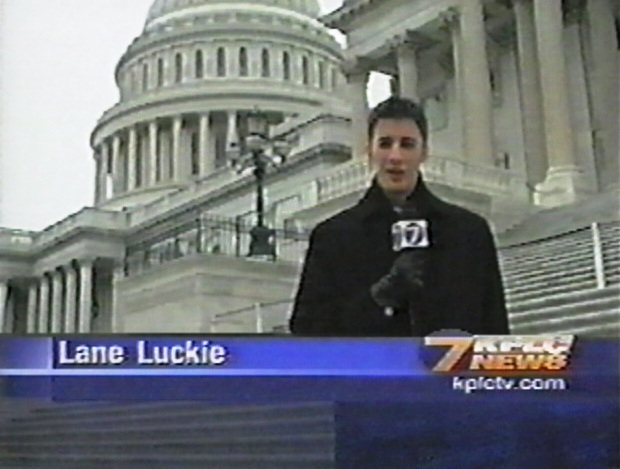
My week in Washington also served as an assignment that put my developing skills to the test. I had spent my four years of high school up to that point as a mentee in KPLC-TV’s Teen Reporter program and the station allowed me to report on my experience in DC. This was a time before “one-man-band” journalists and mobile technology, so my NBC affiliate sent me with a mini camera and microphone to document my experience with the expectation that I would produce a report upon my return home.
Held at Georgetown University, the program was extraordinary in every aspect. Students representing every state in the union and Puerto Rico got to witness democracy in action, explore active citizenship through the American political system, and grow as an individual.

The curriculum was challenging, to say the least. The program textbook summarizes ‘Media & Democracy’ as: “investigates the relationship between the news media and government, with analysis of a free press, a well-informed citizenry and a democratic government.”
Participants were assigned to a “Caucus” for the week. Consisting of about 40 students, the caucuses were led by two volunteer instructors. These groups were not only logistical in nature, but they also spent the week preparing a Current Issues Report to be presented to the full student body. “The report summaries the pros and cons and possible solutions to the issue,” according to the student handbook.

I was assigned to Caucus 3. Our instructors were Michael Snyder, a retired Marine Corps officer and assistant professor at Duke University, North Carolina State University, and the University of North Carolina, and Rebecca L. Westlake, who at the time was in the Air Force, working at the Pentagon in supply policy.
During our Caucus meetings, the students also participated in Crossfires, which were lively discussions about current foreign and domestic policy issues. “Crossfires reveal the diverse perspectives and backgrounds of students involved.” We debated everything from the Patriot Act, self-censorship, Equal Time Rules, breaking news, and covering the War in Iraq.
The full student body convened for seminars throughout the day, featuring movers and shakers in D.C.

Two of the days were dedicated to meetings on Capitol Hill, where scholars met one-on-one with lawmakers and observed congressional hearings. In a rare opportunity, one of our seminar sessions was held on the Floor of the U.S. House of Representatives. Can you imagine, as a high school student, sitting in the same chair as members of Congress? During our seminar on issues facing Congress, led by Rep. Mike Oxley of Ohio, I happened to be seated in fourth row at the large table occupied by party leaders. It was a surreal experience, to say the least.
We even brushed shoulders with members of Congress as we were escorted through the U.S. Capitol’s underground tunnels leading to the House and Senate office buildings. We met with the legislative staff of U.S. Senators John Breaux and Mary Landrieu to discuss how Louisiana priorities were being represented at the Federal level. Over the years, Presidential Classroom had developed such an impressive reputation and network of supporters that these appointments were not unique to my program. Students from every state had similar interactions with their congressional delegations.
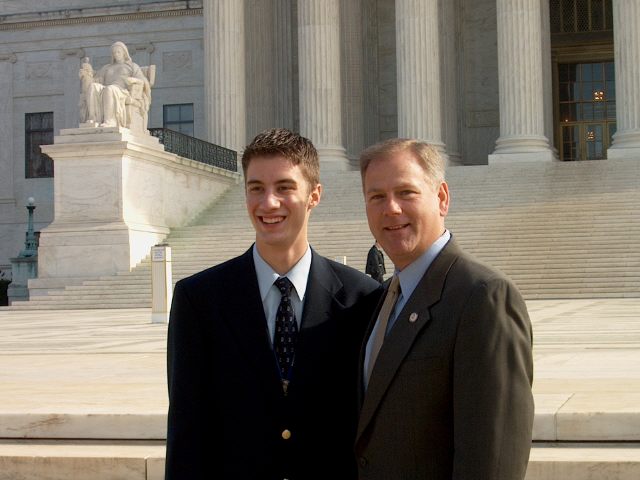
For some lawmakers, however, the connection is quite personal. Congressman Chris John, who represented my home district in southwest Louisiana, attended President Classroom when he was in high school. After a tour of the U.S. Supreme Court, we taped a brief on-camera interview for my KPLC report.

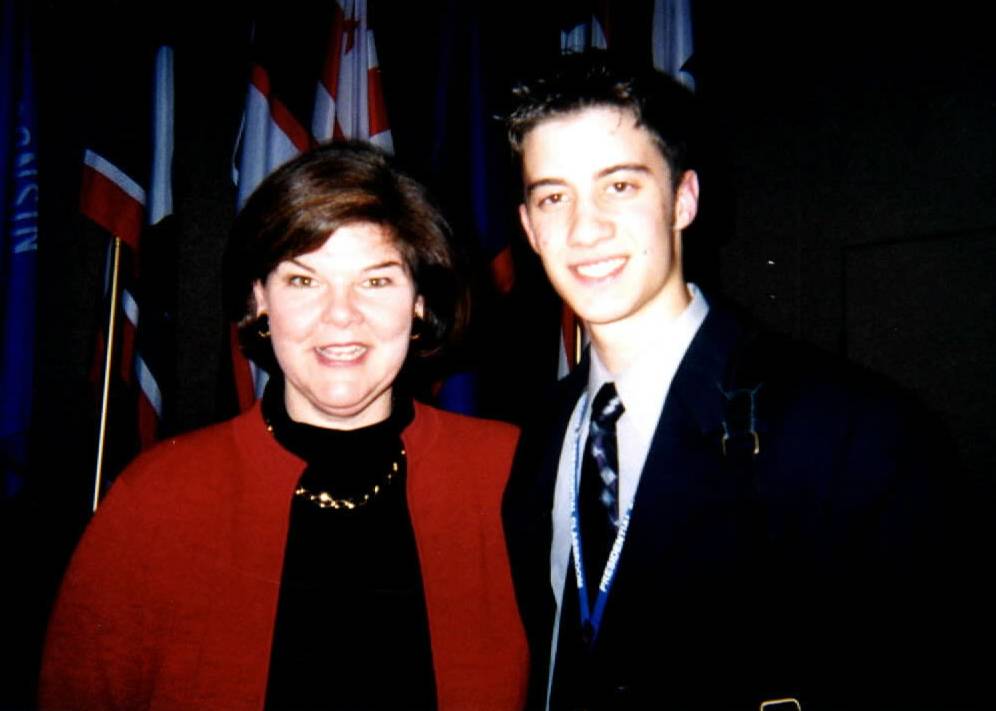
The list of guest speakers reads like a “Who’s Who:” ABC White House Correspondent Ann Compton; consumer advocate and former Presidential Candidate Ralph Nader; Voice of America Director David Jackson; General Michael Hagee, Commandant of the U.S. Marine Corps; White House correspondent Helen Thomas; and Joseph Householder, Communications Director for Senator Hillary Clinton. We also attended seminars on journalism ethics, a presentation by the National Press Photographers Association, and an entertaining performance by the improv troupe ‘The Capitol Steps.’
The week also included visits to some of the country’s most renowned sites, including a private tour of the White House, U.S. Capitol, U.S. Supreme Court, Library of Congress, the Smithsonian, National Museum of American History, Air & Space Museum, the Ronald Reagan Building, the National Press Club, Jefferson Memorial, Lincoln Memorial, Vietnam Veterans Memorial, Korean Memorial, Washington Monument, the FDR Memorial, Ford’s Theatre, and U.S. Botanic Gardens. At Arlington National Cemetery, our group also participated in a wreath laying ceremony at the Tomb of the Unknowns, before witnessing the Changing of the Guard.

Presidential Classroom was so much more than a “field trip” to the nation’s capital. This energized my passion for journalism and deepened my understanding of the only profession explicitly protected by the U.S. Constitution. A free press is essential to a free society and this experience helped me connect so many concepts.
I returned to Louisiana and worked with my mentor at KPLC-TV, anchor Shelley Brown, to produce and edit a package about my experience that eventually aired in the 5 p.m. news. The next morning, I appeared on the morning news to introduce the piece and talk with the anchor team about the experience.
This is when it “clicked” for me that journalism was more than an interest; it was a calling.
20 years have now passed and I’ve been back to Washington numerous times.
I’m so grateful for the impact that first visit has had on my life and the fond memories of the friendships I made. I still keep in touch with my roommate Joe Sorbera and my instructor Mike Snyder!

Unfortunately, Presidential Classroom is only a fading memory for its 100,000+ past participants, including U.S. Senator John Barrasso and countless other lawmakers, as well as award-winning actress Angela Bassett and Miss America 2004, Ericka Dunlap. Planned attempts to re-start the program and organize alumni were sidelined by the COVID-19 pandemic in 2020.
Our country sorely needs a similar program to inspire future journalists.
The views expressed in this blog do not necessarily reflect the views of KLTV/KTRE-TV or Gray Television. They are solely the opinion of the author. All content © Copyright 2024 Lane Luckie


 Lane Luckie